Why Do Bettas Make Bubbles? Nests, Foam and Routine Care
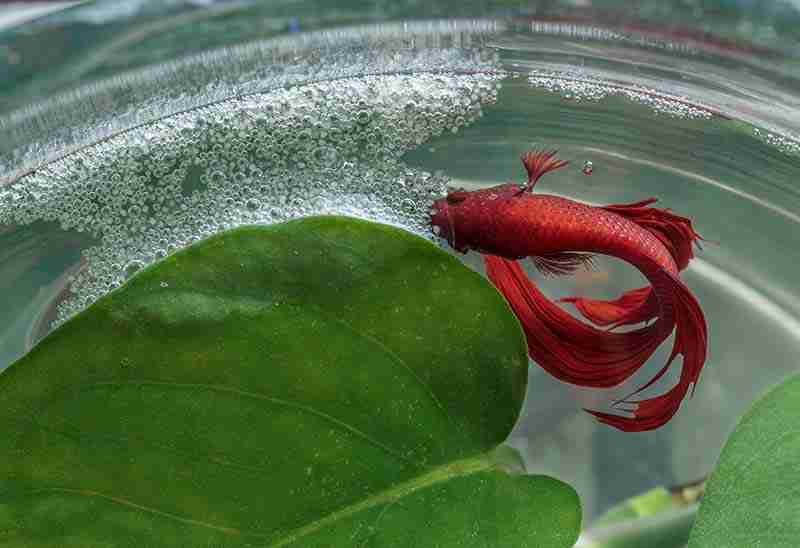
A male Betta splendens may blow mucus-coated bubbles into a cluster at the water surface. This is a bubble nest: a structure associated with reproduction that can hold eggs and newly hatched young.
A solitary male can build one without a female or any eggs present. Nest-building does not mean your betta needs a partner, and a bigger nest does not necessarily mean a healthier or happier fish.
How a bubble nest is made
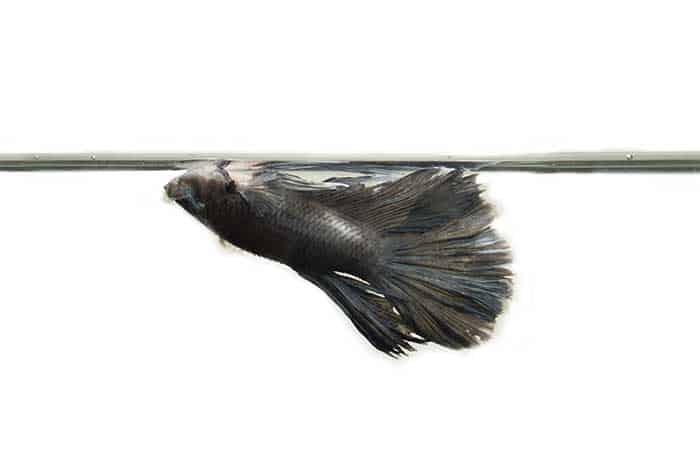
The fish takes air at the surface and releases coated bubbles, often beneath floating cover or in a sheltered corner. It may return repeatedly to build or repair the cluster. The sheltered position helps the structure persist despite surface movement.
Research on the nest-building anatomy of Betta splendens describes the mucus associated with these bubbles. They are not simply ordinary aeration bubbles trapped together by chance.
During a successful breeding event, eggs are placed in the nest and the male usually tends them. However, the same nest-building behaviour can occur where no mating has taken place.
Nest, air bubbles or unusual foam?
| What you notice | Possible explanation | What to check |
|---|---|---|
| A maintained cluster beneath cover | Bubble nest | Fish adding bubbles and otherwise behaving normally |
| Bubbles rising at an airstone | Equipment aeration | Pump and diffuser operation |
| Persistent widespread foam or surface film | Organic accumulation, a product or possible contamination | Recent additions, feeding, maintenance and water tests |
| Surface bubbles with distressed fish | A separate environmental or health problem may be present | Breathing, temperature, ammonia and nitrite |
A photograph of bubbles alone may not settle the question. Consider where they form, whether the fish is building them and what changed in the aquarium.
If soap or another contaminant may have entered, act on that possibility promptly and obtain appropriate help. Do not dismiss widespread unexpected foam as a nest without checking the fish and water.
Does a nest mean the fish is happy?
It tells you that the fish is nesting, but you still need to check its health and water conditions. A fish can build a nest while water conditions or housing still need improvement. Conversely, an otherwise well fish may not build a visible nest.
Judge care from usable space, stable appropriate temperature, filtration, water tests, feeding and normal movement and rest. Do not stop testing because a nest has appeared, or add chemicals because one has not.
Different individuals and conditions produce different nesting patterns. There is no useful target nest diameter a pet owner needs to achieve.
Should you protect it during cleaning?
For a solitary fish with no eggs, necessary maintenance takes priority. Siphon and refill gently, preserve the filter’s biological media and avoid directing a strong jet at the fish. It is usually unnecessary to move the fish or scoop the nest into another container.
If the cluster breaks apart, the fish may rebuild it. Do not skip water changes or switch off needed filtration to keep an empty nest intact. Adjust excessive current for the fish’s comfort, not simply for the foam’s appearance.
Our betta water-change guide explains how to prepare replacement water and avoid unnecessary disturbance.
Does it contain eggs?
Bubbles are not eggs. Eggs are small solid structures that may be held among the bubbles after a spawning event. A solitary male that has not bred has not produced fertilized eggs in its nest.
If breeding did occur, avoid dismantling the nest to inspect it. The egg identification guide explains what observation can show and why colour alone does not prove fertility.
Even when a nest is present, a female cannot be assumed to be safe with the male. Aggression can occur around breeding, and the adults require a suitable separation plan.
What if the fish does not build one?
Do not force the behaviour with mirrors, another male, excessive heat or an unplanned female introduction. Review ordinary care if you have concerns, but a missing nest by itself does not mean the fish is ill.
If appetite, breathing or movement has changed, investigate those signs on their own merits. If the fish is well and its conditions are suitable, you do not need to encourage nest-building. A stable aquarium for the individual matters more than a visible nest.